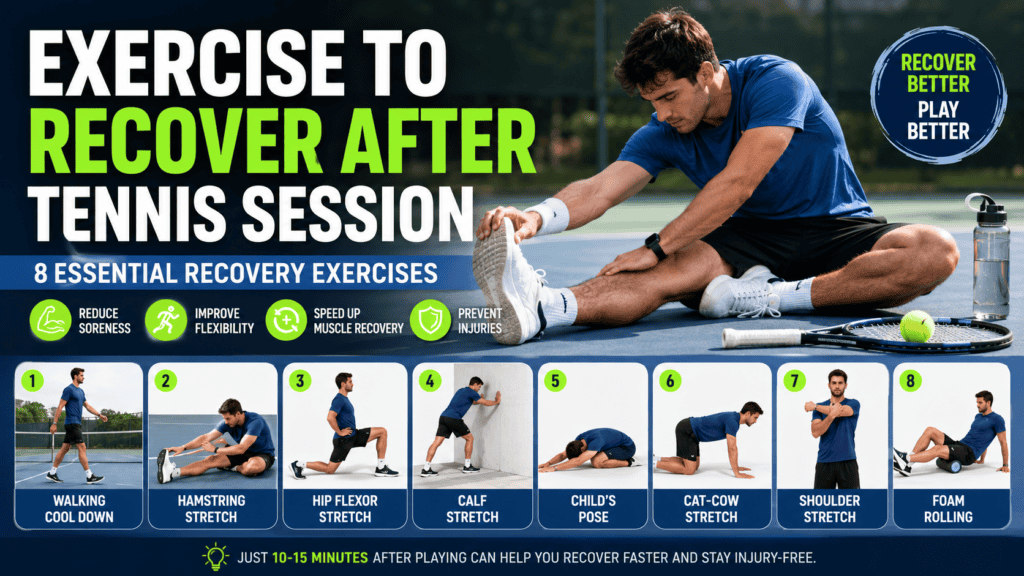
Why Recovery Exercises Matter After Every Tennis Session
A challenging tennis match or practice session pushes almost every muscle in your body. Quick sprints, explosive serves, sudden stops, and repeated direction changes place significant stress on your legs, shoulders, back, and core. That’s why every player should include an exercise to recover after tennis session as part of their fitness routine.
Many recreational players focus only on improving strokes and footwork while ignoring recovery. However, proper recovery helps reduce muscle soreness, improves flexibility, lowers the risk of injuries, and prepares your body for the next match. Whether you play once a week or compete regularly, adding the right exercise to recover after tennis session can significantly improve your overall performance.
In this guide, you’ll discover eight effective recovery exercises that every tennis player should perform after stepping off the court.
Benefits of Exercise to Recover After Tennis Session
Performing the right recovery routine offers several benefits:
- Reduces muscle stiffness
- Improves blood circulation
- Speeds up muscle recovery after tennis
- Prevents cramps and injuries
- Restores flexibility
- Reduces delayed onset muscle soreness (DOMS)
- Helps maintain long-term tennis fitness
- Improves recovery between matches
Just 10–15 minutes of recovery work can make a noticeable difference in how your body feels the next day.
8 Best Exercise to Recover After Tennis Session
1. Walking Cool Down (3–5 Minutes)
Never stop immediately after a match. Instead, walk slowly around the court for three to five minutes. This simple exercise to recover after tennis session gradually lowers your heart rate and prevents blood from pooling in your legs.
Walking also helps remove metabolic waste products from working muscles.
2. Standing Hamstring Stretch
Your hamstrings work continuously during tennis, especially while sprinting and lunging.
How to do it:
- Extend one leg in front.
- Keep your back straight.
- Lean forward gently.
- Hold for 30 seconds.
- Repeat on both sides.
This is one of the most effective stretching after tennis exercises for improving flexibility.
3. Hip Flexor Stretch
Tennis players spend hours moving in a semi-squat position, making the hip flexors extremely tight.
Steps:
- Kneel on one knee.
- Push your hips forward slowly.
- Keep your torso upright.
- Hold for 30 seconds each side.
Adding this exercise to recover after tennis session helps restore hip mobility and reduces lower back tension.
4. Calf Stretch
Your calves absorb tremendous force during every serve, split step, and sprint.
Stand facing a wall.
- Place one foot behind the other.
- Keep the back heel flat.
- Lean forward gently.
- Hold for 30 seconds.
This simple movement helps prevent soreness after tennis and reduces calf tightness.
5. Child’s Pose
Child’s Pose is excellent for relaxing the lower back, shoulders, and hips.
How to perform:
- Kneel on the floor.
- Sit back onto your heels.
- Stretch your arms forward.
- Lower your chest toward the ground.
- Hold for 45 seconds.
It is one of the easiest tennis recovery exercises you can perform anywhere.
6. Cat-Cow Stretch
The repetitive rotation involved in tennis places stress on the spine.
Cat-Cow helps:
- Improve spinal mobility
- Reduce stiffness
- Relax the lower back
- Improve posture
Perform 10–15 slow repetitions while breathing deeply.
7. Shoulder Stretch
Serving and overhead shots place significant strain on the shoulder muscles.
Cross one arm across your chest and gently pull it closer with the opposite arm.
Hold for 30 seconds.
This exercise to recover after tennis session helps maintain shoulder mobility and decreases muscle tightness.
8. Foam Rolling
Foam rolling is one of the most effective methods for post tennis recovery.
Focus on:
- Quadriceps
- Hamstrings
- Glutes
- Calves
- Upper back
Roll slowly for 30–60 seconds per muscle group.
Foam rolling increases blood flow, reduces muscle tension, and speeds muscle recovery after tennis.
Additional Recovery Tips for Tennis Players
Recovery involves more than stretching alone.
Hydrate Properly
Tennis causes significant fluid loss through sweat. Drink plenty of water and replenish electrolytes after long sessions.
Eat Protein and Carbohydrates
Consume a balanced meal within 60 minutes of playing.
Good choices include:
- Greek yogurt
- Eggs
- Tofu
- Chicken
- Rice
- Oats
- Bananas
Proper nutrition supports muscle recovery after tennis.
Sleep Well
Quality sleep is the most underrated recovery tool.
Aim for 7–9 hours of sleep to allow your muscles to repair and rebuild.
Listen to Your Body
Persistent pain should never be ignored. Mild soreness is normal, but sharp pain requires rest or evaluation by a healthcare professional.
Common Recovery Mistakes
Many players unknowingly slow their recovery by making these mistakes:
- Skipping the cool down after tennis
- Sitting immediately after the match
- Not drinking enough water
- Ignoring stretching after tennis
- Playing consecutive days without recovery
- Eating junk food after matches
- Sleeping too little
Avoiding these habits can greatly improve your tennis recovery routine.
Conclusion
Adding an exercise to recover after tennis session to your post-match routine is one of the smartest investments you can make in your performance and long-term health. Recovery isn’t just for professional athletes—it’s essential for every tennis player who wants to stay injury-free and enjoy the game for years to come.
Spend just 10–15 minutes after every session walking, stretching, and foam rolling. Combine these recovery exercises with proper hydration, nutritious food, and quality sleep to recover faster and return to the court feeling stronger. Consistency with your exercise to recover after tennis session routine will help you move better, reduce soreness, and perform at your best every time you play.please visit tennis section for more such articles. You can contact me for further details at my LinkedIn.